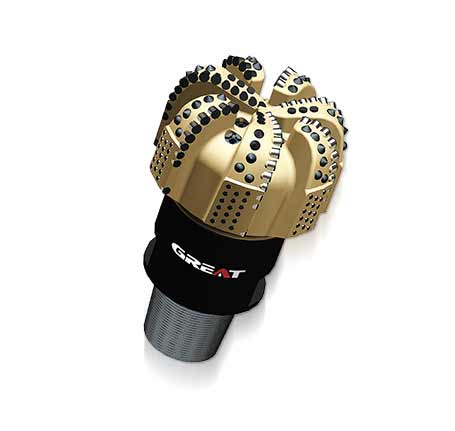
The Application Field and the Drilling Technology of the Roller Cone Bit 

The roller cone bit breaks rock by crushing and shearing. The cone is rolling at the bottom of the well, so the requirement for the torque is small, which can greatly reduce the mechanical load.

When the drill bit is working, the roller cone not only rotates around the axis of the drill string but also rotates around its own axis.

According to the number of roller cones, roller cone bits can be divided into single roller cones, double roller cones, three roller cones, four roller cones and multiple roller cones. According to the method of breaking rock, it can be divided into full-scale drilling cone bit and coring cone bit. According to the nature of the work, it can be divided into forward pilot hole drilling positive circulation roller cone bit, a pilot hole drilling reverse circulation roller cone bit, center continuous sampling cone roller bit, positive circulation reaming roller cone bit, and reverse circulation reaming roller cone bit. According to the teeth and structure of roller cones, it can be divided into steel teeth and embedded roller cone bits. When using it, it is necessary to choose the adaptation range of its tooth shape according to the local conditions.

The roller cone bit is used for drilling and has a wide range of applications, and it can be applied from soft formations to hard bedrock formations.

Used in the water well, and the geothermal well

In contracted water well drilling projects, the adoption of roller cone drilling accounts for more than 80%, especially in the deepwater wells and the geothermal well construction. A small number of traditional fishtail drill holes, three-blade drill bit reaming, and hard alloy steel core drilling, which is not only laborious but also lavish, causing great waste to the construction and increasing the burden. Now, there is no choice but to seek for the innovation and upgrade of the roller cone drilling.

Used in the gas mining

Safety accidents occur frequently in coal production. CBM wells are generally drilled with roller cone bits in the first opening, and pneumatically by DTH hammers in the second opening. Due to the large diameter of the gas discharge well and there are certain requirements about the verticality of the hole. Therefore, the three roller bits are generally used to drill the front pilot holes, and then the roller cone drills are expanded to form the well.

Used in the trenchless project

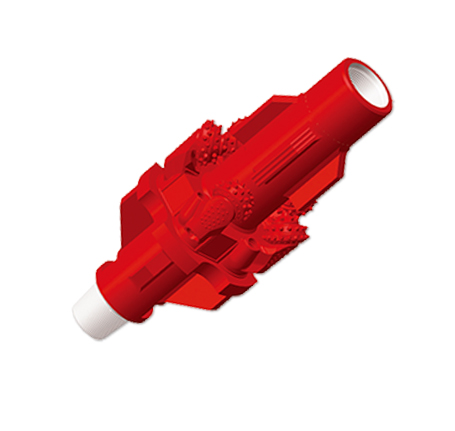
In the construction of trenchless crossing project, in addition to using winged carbide back-expanding drill bits in loose formations, some bedrock formations also need to use roller cone welding back-expanding drill bits to complete the task. It mainly uses roller cone reamer and PDC reamer.

Used in the foundation construction with large diameter pile

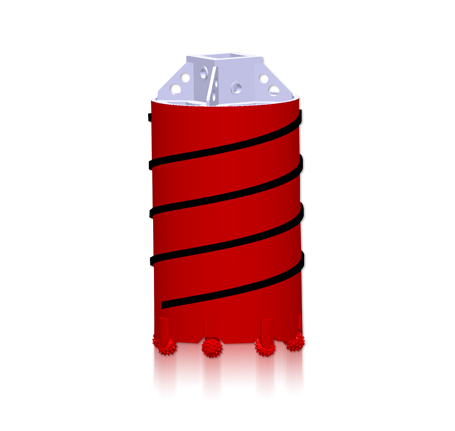
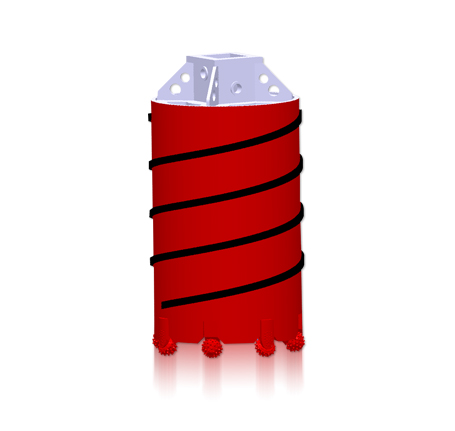
In the construction of building and bridge foundation engineering, rock-socket piles with large diameter and high bearing capacity are often required. The previous method is to use cemented carbide and steel grain drilling, but now, the traditional drilling process has been replaced by the roller cone drilling process, which is of simple operation and strong adaptability. It can realize non-circulation drilling, mud forward circulation drilling, reverse circulation drilling and bottom expansion pile drilling. The main tool is a barrel drill. If it are co-used with a replaceable tooth palm piece, the rock will be broken evenly, with high efficiency, low cost, and the quality of the drilled hole will be better.

Great Drill Bits has roller cone bits for sale and drill bit for granite rock for sale, and out quality and service is trustworthy. Welcome to know more about us and purchase our products.

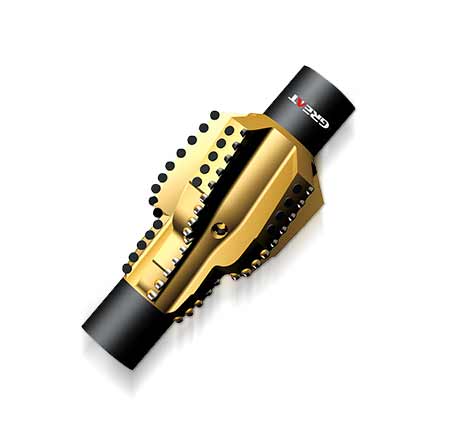
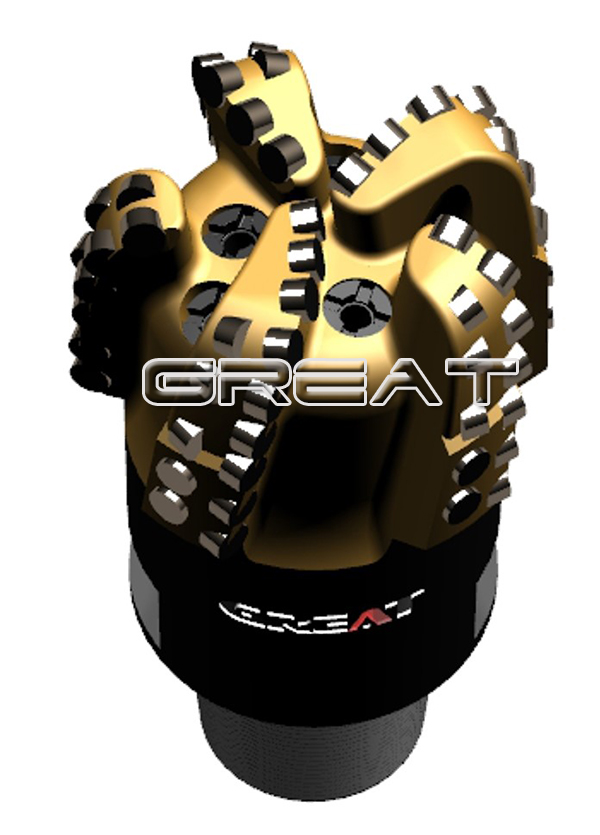
The Cause of PDC Bit Balling

Ⅰ. The common phenomenon of PDC drill bit balling  

1. The footage is obviously slower when drilling, or it is obviously higher when drilling;

2. Increasing or reducing WOB has no obvious effect on drilling speed;

3. It has little effect on the drilling rate when the formation changes;

4. Drilling tool puncture occurs during drilling, and the circulation short circuit occurs, and the drilling speed obviously slows down after treatment.

5. The teeth of the drill bit cannot effectively penetrate into the formation, showing that the torque is reduced or the torque fluctuation range is reduced;

6. The phenomenon of “piston pulling” occurs during tripping and drilling.

Ⅱ. Causes of PDC bit balling

1. Geological factors: the drilled stratum is soft mud with non-diagenetic upper part, which is very easy to stick to the surface of the drill bit, which will cause balling of the drill bit after compaction; although the shale in the stratum is diagenetic, it is easy to hydrate and disperse, making the mud or solid phase in the wellbore greatly increases, which is adsorbed on the surface of the drill bit and causes the bit balling; or the formation contains dispersed gypsum, which causes mud pollution, and the harmful solid phase in the mud is difficult to remove, which greatly increases the probability of formation of bit balling. Under the action of the pressure difference, the harmful solid phase in the wellbore and the cuttings that are not carried out in time are absorbed to form a thick mud cake, which accumulates under the PDC bit when starting the drill, causing the bit balling.

2. Mud performance factors: poor mud inhibition, unable to control the hydration and dispersion of shale; too high solid content and sticky cut, the drilled cuttings are difficult to remove and are easily adsorbed on the surface of the drill bit. If a solid-free phase drilling fluid is used, the drill bits will never have mud packs; the proportion of mud is too high, the water loss is large, and thick mud cakes are easily formed; the lubrication performance is poor, the surface of the drill bit cannot form an effective protective film, and the inferior solids in the drilling fluid are easily adsorbed on the drill bit.

3. Engineering technical factors: the drilling displacement is small, the bottom hole and the drill bit cannot be cleaned effectively, and the upward and backward speed is insufficient. The cuttings stay in the well for a long time and adhere to the well wall to form a thick mud cake, especially in the upper part of the drill. It is more serious when the speed is high; in the soft mudstone formation, the drilling pressure is too high, the formation or the drill cuttings and the surface of the drill bit form direct contact, causing the bit balling; the long open hole drilling does not carry out halfway circulation, and the mud cake scraped from the well wall or drill cuttings will cause the drill bit balling.

  • Drill bit selection factors: The water eye design cannot meet the chip removal requirements; the channel chip removal angle prevents the drilling cuttings from smoothly leaving the bottom of the well.

Cangzhou Great Drill Bits Co.,Ltd., founded in 2010, specialized in processing research of steel and diamond materials, is involved in the R&D, design, production, and sales of petroleum equipment, No-Dig. If you want more information about drill bit supply, please feel free to let us know.

What Should Be Paid Attention to When Reaming Rocks?

The main parameters of the rock reamer operation control are the push-pull force applied to the reamer by the drilling rig drill bits (pull force during reverse reaming, thrust force during forward reaming), or drilling pressure, rotational speed, and mud pumping during reaming. The control points are as follows:

1. Different diameters and different types of rock reamer hole openers have different requirements on drilling pressure. Most rock layer reaming accidents are caused by excessive pursuit of reaming speed and excessive drilling pressure.

2. Rotation speed is another important control parameter for rock reaming construction. The speed referred to here is the speed at which the drill rig drives the drill rod to drive the reamer to rotate. The adjustment of the speed is mainly related to the hardness of the rock. When reaming soft rock, when the diameter of the reamer is ≤30″, the recommended speed should not exceed 60Rpm; when the diameter of the reamer is greater than 30″, the recommended speed should not exceed 40Rpm. When drilling in hard rock, the speed should be reduced accordingly, generally 10~40Rpm. Too low speed will reduce the efficiency of reaming, which is not economical; too high speed will cause abnormal wear of the reamer and even cause reaming accidents.

3. An important principle that should be followed in the rock reaming operation is: the harder the rock to be broken, the greater the drilling pressure required, and the lower the drilling speed required. At the same time, it should be noted that under the same drilling speed condition, the effect of the reamer with different diameters is different. The larger the diameter of the reamer, the greater the linear velocity of the outer edge and the more serious the wear.

4. When reaming the rock layer, it is also critical to ensure the pumping volume of mud. At this time, the main function of mud is to cool the reamer and carry drill cuttings. The actual pumping volume of mud should be determined after calculation based on the amount of drilling cuttings produced by each stage of reaming and the carrying capacity of the mud, and generally should not be less than 1m/min.

5. The construction method of the reamer entering the rock layer: When the rock reamer enters the rock layer from the soft soil layer or enters the hard rock layer from the soft rock layer, the operating point is to first slow down the reaming speed, reduce the drilling pressure, and wait for the reaming After the device body has completely entered the rock layer or hard rock layer, increase the WOB. If the drilling pressure applied during this process is too large, it is likely to cause jamming, thereby damaging the reamer, or at least shortening the life of the reamer bearing.

  • When performing graded reaming, be careful not to choose rock reamers with too similar diameters (gradient difference less than 4″) for graded reaming, otherwise the reaming effect of the reamer will not be exerted on the one hand, and the diameter is too large on the other hand. Similar reamers are prone to the danger of being stuck by the rock layer during operation.

Cangzhou Great Drill Bits Co.,Ltd., founded in 2010, specialized in processing research of steel and diamond materials, is involved in the R&D, design, production, and sales of petroleum equipment, No-Dig. If you want more information about clay bit, please feel free to let us know.

Selection of Reamer during Construction

Choosing the suitable petroleum drill bits types according to the characteristics of the stratum during construction is the main way to improve construction efficiency.

In order to adapt to different formations, the structure of the reamer is also different. At present, there are mainly types of squeezing, runner, cutting and rock reamer.

1. Extrusion-expanding reamer realizes expansion by squeezing the stratum, so it is often used in soft soil.

2. The runner type reamer has a certain cutting and chip removal effect while squeezing the ground. It has a wide range of applicability and can be used in most soil layers.

3. The cutting type reamer mainly realizes the reaming by cutting the stratum, with good chip removal effect, especially suitable for dense sandy soil.

4. Rock reamer hole opener can be divided into cone reamer and hob reamer. The cone can be subdivided into two types: insert teeth and steel teeth (milling teeth). Generally steel teeth are used for soft rock and hard soil layers, insert teeth are mainly used for hard rock construction, and hob reamers are mainly used for hard rock or long-distance rock reaming construction.

Precautions for reaming construction:

1. During the reaming process, it is necessary to strengthen the communication between the operator and the drill pipe loading and unloading personnel at the excavation site to prevent the staff from causing personal injury accidents due to the sudden rotation of the drill pipe when the drill pipe is connected. To ensure construction safety, it is recommended to use a transfer case to connect the reamer and the drill rod.

2. During the reaming construction, it is necessary to pump enough mud into the hole, and the drilling cuttings in the hole are taken out of the hole through the mud circulation to keep the hole clean. This is also whether the final pipeline dragging can proceed smoothly. Important premise.

  • In the process of graded reaming, if abnormalities such as torque and pulling force are found to be too large, the necessary hole washing operations can be carried out after the current level of reaming construction is completed to ensure the safety of subsequent reaming construction. Particular attention is needed during construction.

Cangzhou Great Drill Bits Co.,Ltd., founded in 2010, specialized in processing research of steel and diamond materials, is involved in the R&D, design, production, and sales of petroleum equipment, No-Dig. If you want more information about drill bits for rock and concrete, please feel free to let us know.

Introduction of Roller Bit

Ⅰ. Classification of tooth bits

Drilling, exploration, petroleum, gas drill bits, drilling accessories

Ⅱ. The main structural features of tooth bits:

1. The use of high-strength and high-toughness carbide teeth improves the impact resistance of the teeth and reduces the rate of tooth breakage;

2. Optimized design of the number of teeth, the number of teeth, the height of the exposed teeth and the unique alloy tooth profile, which give full play to the cutting ability and cutting speed of the drill;

3. The circlip is used to lock the roller, which can withstand high drilling pressure;

4. The inner hole of the cone is welded with anti-friction alloy to improve the anti-seizure ability of the bearing;

5. The use of highly saturated nitrile rubber O-ring seals, optimized seal compression to improve the reliability of bearing seals;

6. The all-rubber oil storage bag that can limit the pressure difference and prevent the drilling fluid from entering the lubrication system provides good lubrication for the bearing system and ensures the normal operation of the “O”-shaped sealing ring, which improves the working life of the drill bit;

  • The use of a new type of grease that can withstand high temperatures of 250 ℃ and low wear improves the high temperature resistance of the drill bit sealing lubrication system.

Cangzhou Great Drill Bits Co.,Ltd., founded in 2010, specialized in processing research of steel and diamond materials, is involved in the R&D, design, production, and sales of petroleum equipment, No-Dig. If you want more information about drill bit manufacturers in china, please feel free to let us know.

Basic Structure and Working Principle of Tooth Bits

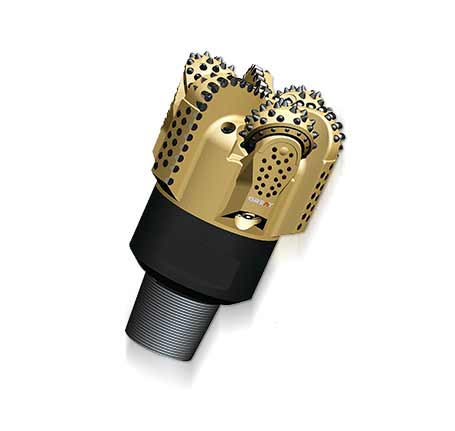
Since the first roller cone bit came out in 1909, the tooth bit has been the most widely used in the world. Tri-cone bits are currently the most commonly used bits in rotary drilling operations. This type of drill has different tooth designs and bearing knot types, so it can adapt to various types of formations. In drilling operations, by correctly selecting a roller bit with a suitable structure according to the nature of the drilled formation, a satisfactory drilling speed and bit footage can be obtained.

1. Basic structure of tricone roller bits:

1. Drill body: three pieces of tooth palms are assembled and welded together, and the upper part has a connecting thread.

2. Cone: a cone-shaped metal body composed of a cone body and teeth. There are two types of teeth: milling teeth and insert teeth.

3. Bearing and its oil storage sealing device.

4. Nozzle.

2. Working principle of tooth bits:

When the tooth bit is working at the bottom of the well, the overall rotation of the bit around the bit axis is called revolution, and the three cones rolling on their own axis at the bottom of the well are called rotation. The weight on the drill bit bears on the rock through the teeth, breaking the rock (crushing action). During the rolling process, the cone alternately touches the bottom of the well with single and double teeth, and the position of the center of the cone fluctuates up and down, causing the drill bit to vibrate longitudinally. This longitudinal vibration causes the drill string to continuously compress and stretch, and the lower drill string converts this periodically changing elastic deformation energy into an impact force on the formation through the teeth to break the rock. This impact and crushing action is the main way for tooth bits to break rocks.

In addition to impacting and crushing the bottom hole rock, the roller cone bit also produces a shearing effect on the bottom hole rock. When the roller cone rolls at the bottom of the well, it also produces the sliding of the teeth against the bottom of the well. The sliding of the teeth creates a shearing effect on the bottom of the well rock, scraping the bottom of the well like a scraper bit. The sliding of the teeth is mainly caused by the over-top, secondary cone and shift axis arrangement of the cone. The super-top arrangement of the cones causes the sliding in the tangential direction, and the shifting arrangement of the cones causes the sliding in the axial direction. Generally, drill bits for drilling soft to medium-hard formations have both super-top, compound cone and shift axis; drill bits for drilling medium-hard to hard formations have super-top and compound cones in design; for drilling extremely hard and highly abrasive formations The drill bit often uses a single cone cone, which does not exceed the top and does not shift the axis.

As a supplier of Great Drill Bits, founded in 2010, specialized in processing research of steel and diamond materials, is involved in the R&D, design, production, and sales of petroleum equipment, No-Dig. If you want more information about drill bit factory, please feel free to let us know.

Classification and Selection of Tooth Bits

There are many manufacturers of tooth bits, and these drill bit factories provide bits of various types and structures such as drilling rig drill bits. In order to facilitate the selection and use of roller cone bits, the International Association of Drilling Contractors (IADC) has developed a unified worldwide classification standard and numbering method for roller cone bits.

IADC stipulates that each type of drill bit is represented by three digits, and the meaning of each number is as follows:

The first digit indicates the type of tooth and the formation suitable for drilling:

1 – Milling teeth, soft ground;

2 – Tooth milling, medium to medium hard formation;

3 – Milling teeth, hard, abrasive or semi-abrasive formations;

4 – Spare;

5 – Insert teeth, soft to medium stratum;

6 – Insert teeth, medium-hard stratum;

7 – Insert teeth, hard, abrasive or semi-abrasive formation;

8 – Insert teeth, extremely hard, highly abrasive formations.

The second digit indicates that the drilled formation is subdivided into four hardness grades 1, 2, 3, and 4.

The third digit indicates the structural characteristics of the drill:

1 – Unsealed rolling bearings;

2 – T-shaped outer row tooth gauge;

3 – There are insert teeth on the gauge diameter;

4 – Sealed rolling bearing;

5 – Sealed rolling bearing, with insert teeth on the gauge diameter;

6 – Sealed sliding bearing;

7 – Sealed sliding bearing, with insert teeth on the gauge diameter;

8 – Directional well deflection bit;

9 – Other.

Advantages of roller cone bits:

1. The double action of impact and shearing breaks the rock, both the impact of the teeth and the shear caused by sliding, the rock breaking efficiency is high.

2. It is suitable for a wide range of formations and is suitable for drilling in all formations.

3. The self-washing effect of the drill bit is good, and it is not easy to mud pack.

  • Lower cost of drill bit.

Cangzhou Great Drill Bits Co.,Ltd., founded in 2010, specialized in processing research of steel and diamond materials, is involved in the R&D, design, production, and sales of petroleum equipment, No-Dig. If you want more information about bits of rock, please feel free to let us know.

 Rock Reamer Hole Opener – Precautions for Drilling through Reamer 

1. Rock drilling is different from soil drilling. Generally, the cost is higher and the cost is higher. Therefore, the safety of reaming and the reliability of the project must be the highest principles, and no risky advances.

2. A drill bit should always be kept in the forward rotation state during the movement of the hole, to avoid the drill bit being thrown away, and to prevent the drill rod and the reaming cutting tool from falling off.

3. When the bit starts to work, it should be lightly pressed and turned slowly for more than half an hour, so that the bit cutting tool is in full contact with the rock at the bottom of the hole, and then slowly pressurized to normal pressure for drilling to avoid the bit deviation and the trajectory change.

4. Drilling should strictly follow the drilling regulations during drilling. If the reaming force is too large or the rotation speed is too high, blocking occurs, the drilling should be stopped in time, and the drilling pressure and speed should be adjusted until the drilling is normal.

5. When encountering pebble stratum and broken stratum, the footage should be controlled to make the drill cuttings smaller, facilitate mud carrying, reduce the accumulation of large particles in the hole, and create convenient conditions for the next stage of reaming or dragging the pipe.

6. If the rock reamer hole opener has reached the end of its life, or the hole needs to be backed out in time, it should be withdrawn in time, and it should be noted that during the process of bit backing, the drill rod always keeps the forward rotation state, and the back cannot be too fast, and the back thrust It should not be too large to prevent drill pipe breaking accidents.

7. For normal reaming, in theory, the hole should be washed at least once before each stage reaming to make the inside of the hole clean and reduce the wear of the drill and the jamming during drilling. This is especially important in large-scale reaming.

8. Remember: it is strictly forbidden to use a rock reamer for hosting, and a barrel reamer must be used with a tube. Because the rock reamer and the hole wall produce new cutting action, the cone or hob alternately contacts the bottom of the hole to produce greater vibration, which causes greater disturbance to the end thread, which is easy to damage or trip.

Cangzhou Great Drill Bits Co.,Ltd. is one of professional drill bit manufacturers in china. We provide PDC Bit, Hybrid Drill Bit and so on. Want to know more? Please contact us.

A Form of Rock Penetration Drilling 

1. Rock through directional drilling

The directional drilling of rock crossing engineering mainly includes simple construction method, double wall drill pipe drilling method, pneumatic or hydraulic DTH hammer impact rotary directional drilling method, and mud motor directional drilling method.

Among them, the mud motor-driven directional drilling method is the most common rock directional drilling method at home and abroad. Suitable for all types of trenchless drilling rigs above 25t, especially large trenchless drilling rigs.

Mud motors are also called screw drills, and they are generally used in conjunction with roller guide bits or PDC bits and wired or wireless probe devices. During normal drilling, the drill rod and the motor rotate together to drill linearly; when steering is required, the motor bending point busbar is adjusted to the 12 o’clock direction of the probe, the drill rod and motor housing do not rotate, only the reaction torque and feed force are provided. The motor rotor drives the drill bit to rotate under the hydraulic drive of the mud pump, thereby realizing guided drilling. The motor bend angle for horizontal directional drilling is generally between 1.5-3 degrees, and different bend angles are selected according to the curvature of the pipeline design trajectory.


Motor-driven guided drilling connection form: 

Wireless: drill pipe – instrument compartment – motor – cone bit 

Wired: drill pipe – non-magnetic drill collar – instrument compartment – non-magnetic drill collar – motor – cone bit

2. Rock drilling through reaming

After the pilot hole is completed, expand the hole according to the pipe diameter.

The current rock reamer hole opener is roughly divided into two types:

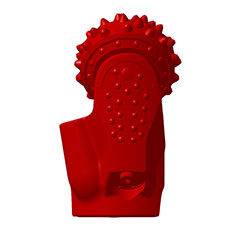
One is a fixed cone type reamer, which uses the cone palm of a petroleum cone bit as a cutting tool, which is connected to the center shaft of the reamer and the chassis by welding.

The second is a replaceable hob reamer, which uses a replaceable hob as a cutting tool. According to different installation methods, hobs are divided into tool holder installation and suspension installation.

Cangzhou Great Drill Bits Co.,Ltd. is one of professional rock drill bit suppliers . We provide PDC Bit, Hybrid Drill Bit, blast hole drill bits, best drill bit for hard rock, drill with drill bits and so on. Want to know more? Please contact us.

Features of Replaceable Hob Type Rock Reamer Hole Opener 

1. This series of drilling tools are suitable for large-diameter traversing projects with heavy loads of large drilling rigs, and suitable for various rock formations.

2. The rock reamer hole opener uses a large-diameter metal sealed hob as a cutting tool. The body can be used multiple times, just change the wheel. The hob wheels are divided into three types: A, B, and C, which can be adjusted to different reaming diameters, which provides convenience for multiple projects to use the same drilling tool body.

3. It is easy to change the wheel after the hob wheel is damaged. Generally, the wheel can be changed within half an hour, which is convenient and quick.

4. The long-term comprehensive cost advantage is obvious.

5. All reversing hobs adopt metal seals. At the same time, the diameter of the hob is large (the diameter of the large end of the ABC wheel is 346, 360, 372), and the linear speed of the hob is low during the rotation process, which is especially suitable for large pipe diameter construction. The maximum linear speed ratio to the drill bit is 4.5 times (relative to the 66″ re-expanded hole diameter), that is, the drill bit makes one revolution and the hob rotates 4.5 times to ensure that the hob bearing is in the low speed range, so the hob has a long life, under 100% under normal conditions. More than hours, unless the rock is particularly hard or abnormal, the reaming time needs to be changed for a long time. Basically, there is no need to replace the hob to achieve one-time back expansion.

6. There is no problem of palm back wear.

7. All hobs are made of ¢19 large alloy, with fast cutting length, and different tooth types can be selected according to different formations. Hard rock adopts blunt tooth type, soft rock adopts bevel tooth type.

8. Excellent hydraulic design, taking full consideration of the unobstructed slag discharge of the flow channel and realizing hydraulic rock breaking.

9. The drill body is made of high-quality alloy steel for precision forging, which has good weldability and is convenient for on-site repair.

10. The guide body of the drill bit larger than 38 inches adopts the spiral belt design, which has good guiding and slag guiding effect, reducing repeated breakage of the drill bit, and protecting the main hob cutter seat.

11. Fully consider the problem of weight reduction. The weight of the largest 66″ reamer is controlled within 3.5T, which has a decisive influence on reducing the drilling torque and the tendency of trajectory change.

Great Drill Bits is one of professional drill bit manufacturers in china. We provide PDC Bit, Hybrid Drill Bit, drill bit supply and so on. Want to know more? Please contact us.

通过 WordPress.com 设计一个这样的站点
从这里开始